How to Get There
- Flights: Addis Ababa Bole International Airport (ADD) is the main gateway. Many international airlines fly here.
- Visas: Most travelers need a visa. E-visa is available for many nationalities at evisa.gov.et.
- Airport Info: The airport is a few minutes from central Bole. Taxis and ride-hailing apps are available at arrivals.
Where to Stay
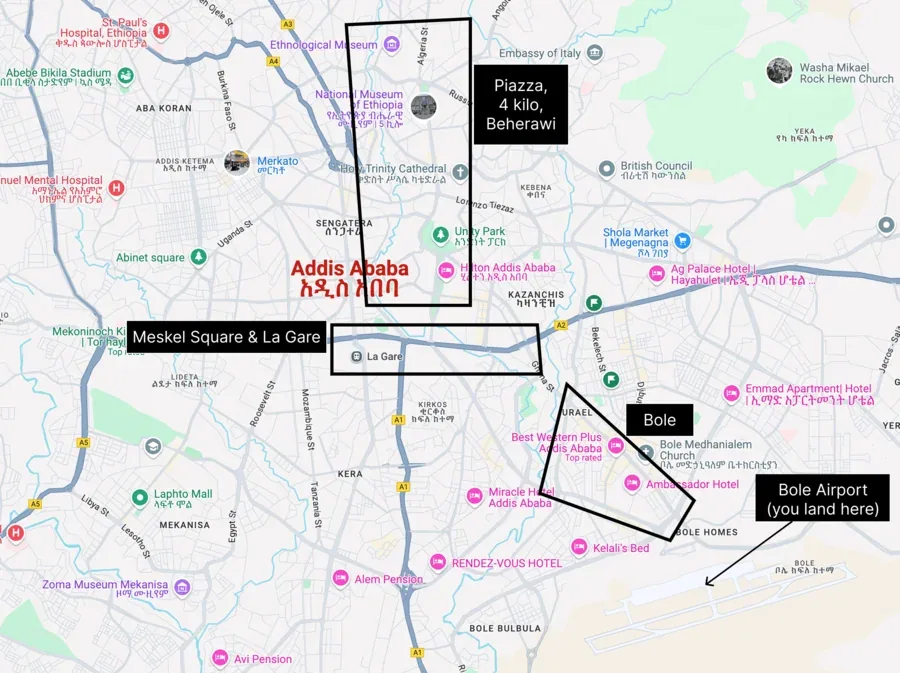
Addis has a few distinct areas worth understanding before you book. Here's how they differ:
Minutes from the airport and packed with everything you need: restaurants, cafés, hotels, markets, music venues, and event spaces. The most convenient base for first-timers and short stays. Bole Road is the city's main commercial artery.
Home to some of Addis's oldest architecture, the National Museum (Lucy!), palaces, Tomoca Coffee, and the Italian-influenced Piazza district. Best for travelers who want a more historically rich, walkable base.
The geographic center of the city. Big public celebrations happen here, including Meskel and national holidays. Several high-quality hotels, the National Theatre, and Friendship Park are all within a short walk.
Popular with expats and long-stay visitors. Less touristy, more local feel. Good restaurants and coffee shops, lower-key evenings out. Well-connected to Bole by ride-hailing apps.
Transportation
The most convenient way to get around is to use ride-hailing apps like Ride (Android | iOS), Feres (Android | iOS), and Yango (Android | iOS).
- Taxis are available, but agree on a price before starting your ride.
- Public transport (minibuses, light rail) is cheap but can be crowded and confusing for newcomers - mainly due to the language barrier.
Currency & Money Exchange
ATMs are available at the airport, and you can exchange money there as well. Cash is used widely so it's a good idea to get some as you arrive.
Carry some US dollars in cash. Cards are accepted at most hotels and larger restaurants, but they can fail unexpectedly. Having cash will save you a lot of trouble at immigration.
SIM card & Internet
You can buy your SIM from either Ethio Telecom or Safaricom Ethiopia. Buy at Bole Airport or any service shop, make sure to bring your passport. You can buy e-SIMs online but prices for normal SIMs are much cheaper.
Safety Tips & Local Etiquette
Addis Ababa is a vibrant and welcoming city, but like any destination, it helps to know a few local tips and customs to make your stay smooth, respectful, and safe. Here’s what every traveler should know before exploring Ethiopia’s capital.
Safety Tips
- Stay Aware of Your Surroundings:
- Addis is generally safe, but petty theft (like pickpocketing) can happen, especially in crowded areas like Mercato.
- Keep your belongings secure: backpacks zipped, phones and wallets close. Don't flash your phone, jewelry, and other valuables.
- Use Trusted Transportation:
- Use ride-hailing apps like Ride or Feres instead of random taxis.
- If you are not using ride-hailing apps, agree on a price before the ride starts.
- Stay in Well-Lit Areas After Dark:
- Stick to busy, well-lit streets in the evening. Group travel is always safer at night.
- Carry a Copy of Your ID:
- Keep your passport locked at your hotel.
- Carry a copy or a photo of your passport for ID checks.
- Beware of Scams:
- Friendly strangers offering unsolicited tours or help with directions may expect a tip.
- Politely decline if it feels suspicious.
Local Etiquette
- Greetings Matter:
- A handshake is the standard greeting.
- Close friends often greet with a shoulder bump or two/three air kisses.
- Address elders and officials with respect.
- Dress Modestly:
- In public spaces, modest clothing is appreciated, especially near religious sites.
- Shorts and sleeveless tops are fine in some places, but best avoided in churches and mosques.
- Eating Customs:
- Meals, especially traditional ones, are often shared from a communal plate.
- Wash your hands before eating (handwashing stations are common).
- Use your right hand when eating injera and dishes, as the left hand is considered impolite for eating.
- Photography:
- Always ask permission before photographing people.
- Avoid taking photos of government buildings, military sites, and airports.
- Religious Respect:
- Ethiopia has deep Orthodox Christian and Islamic traditions.
- Remove your shoes when entering a church or mosque.
- Women may be asked to cover their hair in religious spaces.
- Tipping:
- Tipping isn’t mandatory, but it’s appreciated.
- Round up your taxi fare or leave 10% at restaurants if service was good.
Tour Guides & Local Services
Whether you need a licensed tour guide, a driver for day trips, a translator, or a business consultant, connecting with the right local contact makes a huge difference. Here are some reliable starting points.
How to Find a Guide
- Your hotel or Airbnb host: often the most reliable recommendation. They know trustworthy local guides and will vet them for you.
- Ethiopian Tour Operators Association (ETOA): the official body for licensed tour operators in Ethiopia. Licensed guides carry ID cards.
- Ask us: use the contact form below. We'll do our best to connect you with what you need.
What Guides Can Help With
- City tours: museums, palaces, markets, cultural sites (half-day or full-day)
- Day trips: Debre Libanos, Tiya, Rift Valley lakes. A driver + guide makes these far more rewarding.
- Coffee tours: Hadero Coffee offers excellent bean-to-cup tours (Mon–Sat, ~2–3 hours). Book in advance.
- Translators & interpreters: essential for business meetings or medical appointments. Ask your hotel.
- Business consultants: for investors or those exploring the Ethiopian market, local consultants with government and private sector relationships are invaluable. Contact the Ethiopian Chamber of Commerce.
Practical Notes
- Always agree on price and scope before the tour begins. Get it in writing if it's a multi-day arrangement.
- Licensed guides are registered with the Ministry of Culture and Tourism; you can ask to see their ID.
- Tipping is not mandatory but is deeply appreciated. A good day guide tip is 200–500 ETB.
Frequently Asked Questions
Which neighborhood should I stay in?
Bole is the most popular area for visitors, close to the airport, with international restaurants, hotels, and shopping. Piazza (4 Kilo) is better for history and culture. CMC Road is quieter and residential.
How do I get from the airport to the city center?
Bole International Airport is about 5km from the city center. App-based ride-hailing (Ride, Feres, Yango) is the easiest option. Taxis are available but agree on the fare in advance.
Do I need a visa to visit Ethiopia?
Most nationalities need a visa. An e-visa is available online at evisa.gov.et. Visa on arrival is also available at Bole International Airport for many nationalities.